

Featured
What Do DeepSeek, a Genius Girl, and Temu Have in Common? Quite a Lot A write up from a still-living dinobaby.
The Techmeme for January 28, 2024, was mostly Deepseek territory. The China-linked AI model has roiled the murky waters of the US smart software fishing hole. A big, juicy AI creature has been pulled from the lake, and it is drawing a crowd. Here’s a small portion of the datasphere thrashing on January 28, 2025 at 0700 am US Eastern time:

I have worked through a number of articles about this open source software. I noted its back story about a venture firm’s skunk works tackling AI. Armed with relatively primitive tools due to the US restriction of certain computer components, the small team figured out how to deliver results comparable to the benchmarks published about US smart software systems.
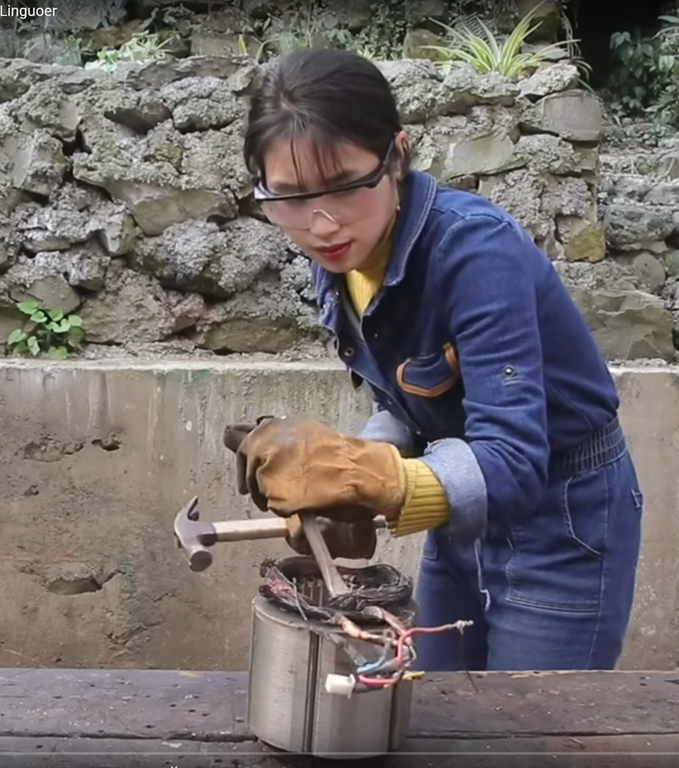
Genius girl uses basic and cheap tools to repair an old generator. Americans buy a new generator from Harbor Freight. Genius girl repairs old generator proving the benefits of a better way or a shining path. Image from the YouTube outfit which does work the American way.
The story is torn from the same playbook which produces YouTube “real life” stories like “The genius girl helps the boss to repair the diesel generator, full of power!” You can view the one-hour propaganda film at this link. Here’s a short synopsis, and I want you to note the theme of the presentation:
- Young-appearing female works outside
- She uses primitive tools
- She takes apart a complex machine
- She repairs it
- The machine is better than a new machine.
The videos are interesting. The message has not been deconstructed. My interpretation is:
- Hard working female tackles tough problem
- Using ingenuity and hard work she cracks the code
- The machine works
- Why buy a new one? Use what you have and overcome obstacles.
This is not the “Go west, young man” or private equity approach to cracking an important problem. It is political and cultural with a dash of Hoisin technical sauce. The video presents a message like that of “plum blossom boxing.” It looks interesting but packs a wallop.
Here’s a point that has not been getting much attention; specifically, the AI probe is designed to direct a flow of energy at the most delicate and vulnerable part of the US artificial intelligence “next big thing” pumped up technology “bro.”
What is that? The answer is cost. The method has been refined by Shein and Temu by poking at Amazon. Here’s how the “genius girl” uses ingenuity.
- Technical papers are published
- Open source software released
- Basic information about using what’s available released
- Cost information is released.
The result is that a Chinese AI app surges to the top of downloads on US mobile stores. This is a first. Not even the TikTok service achieved this standing so quickly. The US speculators dump AI stocks. Techmeme becomes the news service for Chinese innovation.
I see this as an effective tactic for demonstrating the value of the “genius girl” approach to solving problems. And where did Chinese government leadership watch the AI balloon lose some internal pressure. How about Colombia, a three-hour plane flight from the capital of Central and South America. (That’s Miami in the event my reference was too oblique.)
In business, cheaper and good enough are very potent advantages. The Deepseek AI play is indeed about a new twist to today’s best method of having software perform in a way that most call “smart.” But the Deepseek play is another “genius girl” play from the Middle Kingdom.
How can the US replicate the “genius girl” or the small venture firm which came up with a better idea? That’s going to be touch. While the genius girl was repairing the generator, the US AI sector was seeking more money to build giant data centers to hold thousands of exotic computing tools. Instead of repairing, the US smart software aficionados were planning on modular nuclear reactors to make the next-generation of smart software like the tail fins on a 1959 pink Cadillac.
Deepseek and the “genius girl” are not about technology. Deepseek is a manifestation of the Shein and Temu method: Fast cycle, cheap and good enough. The result is an arm flapping response from the American way of AI. Oh, does the genius girl phone home? Does she censor what she says and does?
Stephen E Arnold, January 28, 2025
Interviews
DarkCyber, March 29, 2022: An Interview with Chris Westphal, DataWalkChris Westphal is the Chief Analytics Officer of DataWalk, a firm providing an investigative and analysis tool to commercial and government organizations. The 12-minute interview covers DataWalk’s unique capabilities, its data and information resources, and the firm’s workflow functionality. The video can be viewed on YouTube at this location.
Stephen E Arnold, March 29, 2022
Latest News
Grok Is Spicy and It Did Not Get the Apple DealAnother dinobaby post. No AI unless it is an image. This dinobaby is not Grandma Moses, just Grandpa Arnold. First, Gary Marcus makes clear that AI is not delivering... Read more »
Shall We Recall This Nvidia Prediction?Nvidia. Champion circular investor. Leather jacketed wizard. I dug up this item as a reference point: “ ‘China Is Going To Win The AI Race’ – Nvidia... Read more »
More Obvious Commentary about the Smart Phone That Makes People StupidAdults are rabid about protecting kids. Whether it’s chalked up to instinct, love, or simple common sense, no one can argue that it’s necessary to guide and... Read more »
Apple and Google: Lots of Nots, Nos, and TalkAnother dinobaby post. No AI unless it is an image. This dinobaby is not Grandma Moses, just Grandpa Arnold. This is the dinobaby, an 81 year old dinobaby. In my... Read more »
AI Still Wrong after All These YearsJosh Brandon at Digital Trends was curious what would happen if he asked two chatbots to fact check each other. He shared the results in, “I Asked Google Gemini... Read more »
Interruptions: The Productivity Killer for SomeDo you have a sign on your door that says, “Please don’t interrupt”? Uninterrupted focus is an engaged species says Can Duruk in his Off By One blog post,... Read more »
Telegram Notes: Mama Durova and Her Inner CircleAnother dinobaby post. No AI unless it is an image. This dinobaby is not Grandma Moses, just Grandpa Arnold. We filtered our notes for my new book “The Telegram... Read more »
The Drivers for 2026The new year is here. Decrypt.co runs down the high and lows in, “Emerge’s 2025 Story of the Year: How the AI Race Fractured the Global Tech Order.” The... Read more »
Security Chaos: So We Just Live with Failure?Another dinobaby post. No AI unless it is an image. This dinobaby is not Grandma Moses, just Grandpa Arnold. I read a write up that baffled me. The article appeared... Read more »
Apple Google Prediction: Get Real, PleaseAnother dinobaby post. No AI unless it is an image. This dinobaby is not Grandma Moses, just Grandpa Arnold. Prediction is a risky business. I read “No, Google... Read more »
-

- Subscribe to Beyond Search
Feature archive
News archive

-


